Introduction: What is Tasawwuf?
Tasawwuf in Australia represents the living heart of Islam’s spiritual path, the science of purifying the soul and drawing nearer to Allah. It is defined in the Qur’an:
قَدْ أَفْلَحَ مَن زَكَّاهَا وَقَدْ خَابَ مَن دَسَّاهَا
He has succeeded who purifies it, and he has failed who corrupts it.” (Qur’an 91:9–10)“
The Prophet ﷺ described this dimension in the famous Hadith of Jibril:
“Ihsan is that you worship Allah as though you see Him, and if you cannot see Him, then indeed He sees you.” (Sahih Muslim 8)
Classical scholars often defined Tasawwuf as the inner refinement of Islam — tazkiyat al-nafs (purification of the soul), cultivating love of Allah, and embodying noble character (akhlaq). Imam al-Junayd famously said: “Tasawwuf is that Allah causes you to die to yourself and live in Him.” (Al-Qushayri, Risala al-Qushayriyya)
Tasawwuf is described as the cultivation of good character, tranquillity of the heart, love and affection, certainty, and awareness of God. It is the practice of living faith with depth, not as a theory but as a transformative reality.
Its linguistic roots also reveal its essence:
From ṣūf (wool), symbolising the simplicity of early ascetics.
From Ahl al-Suffa, the poor companions of the Prophet ﷺ who devoted themselves to worship.
From ṣafā’ (purity) — to purify the heart of everything except Allah.
Thus, Tasawwuf is not something external to Islam. It is the essence of ihsan — Islam’s inner dimension, and it has always been at the core of the Islamic tradition.
The Early Presence of Tasawwuf in Australia
The history of Tasawwuf in Australia is rich yet under-explored. Dr Abu Bakr Sirajuddin Cook, in his article Tasawwuf ‘Usturaliya: Prolegomena to a History of Sufism in Australia (Australian Journal of Islamic Studies, 2018), shows that Sufi heritage accompanied some of the earliest Muslim presences on this continent.
Makassan Fishermen: From as early as the 16th century, Macassan traders from Sulawesi made regular voyages to northern Australia in search of trepang. Their Islam was heavily shaped by Sufism, the driving force of Islamisation in the Indonesian archipelago . Indigenous Yolngu communities of Arnhem Land absorbed elements of this spiritual contact — ritual phrases invoking “Allah” and echoes of Muslim prayers survive in their oral traditions.
Afghan Cameleers: Between 1860–1910, Afghan and South Asian cameleers brought Islam inland. These regions were steeped in Sufi traditions. Evidence of prayer beads, devotional poetry, and mosque-building practices suggests that Tasawwuf travelled with them. A rare 500-page Bengali puthi (devotional songbook) was discovered in a cameleer mosque in Broken Hill — a striking reminder of the Sufi devotional culture that accompanied them.
These early interactions show that Tasawwuf was not an imported modern curiosity, but embedded in the earliest encounters between Islam and Australia.
Tasawwuf in the Australian Public Imagination
Australian newspapers from the 19th century frequently mentioned “dervishes” and “Sufis.” Sometimes these were orientalist caricatures, but their regular appearance shows that Sufi identity was known to the literate public of the time.
During the early 20th century, interest in Sufism began to appear in Western discourse, often presented through a philosophical or cultural lens that overlooked its inherently Islamic foundations. Some researchers subsequently treated this as the beginning of Sufism in Australia, overlooking the much earlier and authentically Islamic presence among the Makassans, Afghan cameleers, and other migrant communities.
As Dr Abu Bakr Sirajuddin Cook notes, Australia’s Sufi heritage is in fact much older, more diverse, and deeply connected to traditional Islam rather than modern reinterpretations or decontextualised forms.
The Living Tradition Today
Today, all major Sufi orders (turuq) are represented in Australia — Qadiriyya, Naqshbandiyya, Shadhiliyya, Rifa‘iyya, Tijaniyya, and Ba‘Alawiyya. Most exist as small, grassroots circles that meet regularly for dhikr, Mawlid, and study. Each order maintains its own autonomy and spiritual rhythm, with gatherings often centred around a local shaykh or teacher rather than a centralised structure.
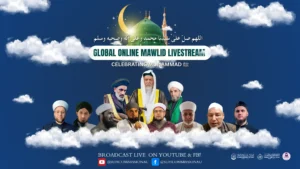
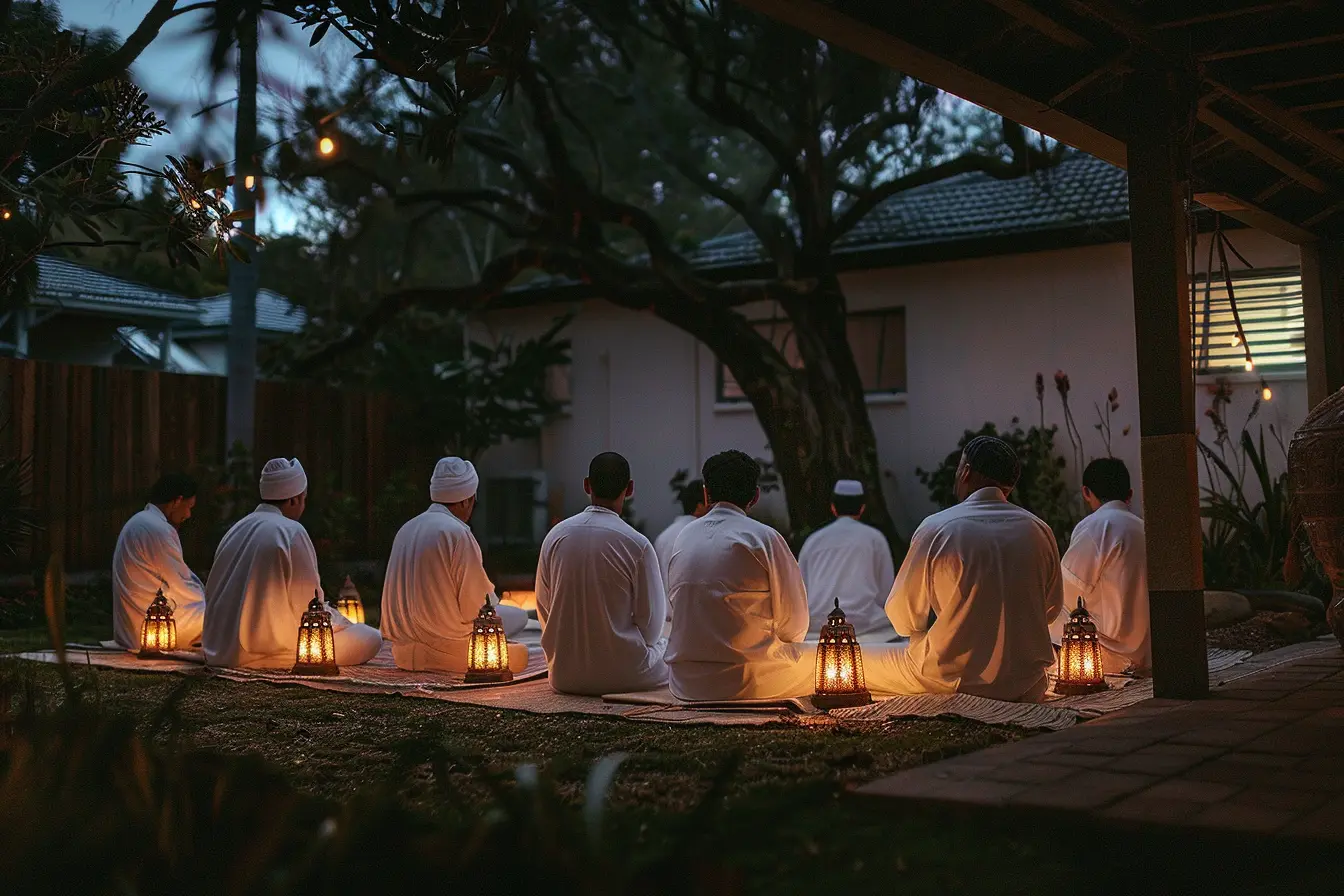
Across cities such as Sydney, Melbourne, and Perth, Sufi gatherings are often hosted in humble, makeshift settings — converted garages, backyards, or small rented halls. These modest zawiyahs reflect the sincerity and grassroots nature of Tasawwuf in Australia, serving as spaces of dhikr, learning, and companionship where Muslims from diverse cultural backgrounds come together in love of Allah and His Messenger ﷺ. Many of these gatherings are now broadcast online, allowing Australian Sufi communities to connect with the wider global network of spiritual seekers.
While these gatherings reflect the sincerity and devotion of Australia’s Sufi presence, the broader Sufi community operates in a largely fragmented manner. Each order functions independently with minimal collaboration or coordination between groups. This autonomy allows diversity in spiritual expression, yet it also means that collective initiatives and unified representation remain limited across the country.
Young Muslims are increasingly drawn to Tasawwuf as a source of balance, discipline, and healing. In a society marked by materialism and mental health struggles, the Qur’an’s timeless promise rings true:
أَلَا بِذِكْرِ اللَّهِ تَطْمَئِنُّ الْقُلُوبُ
Surely, in the remembrance of Allah do hearts find rest.” (Qur’an 13:28)“
Challenges Facing Tasawwuf in Australia
Secular context: A society sceptical of spirituality and religion.
Islamophobia: Negative media narratives about Islam affect all Muslims, including Sufis.
Misrepresentation: Some groups attack Tasawwuf as “innovation,” while Orientalists reduce it to mysticism stripped of Shari‘ah.
Fragmentation: Even within Sufi circles, genuine unity is often lacking. Many orders operate independently, and some shaykhs struggle to cooperate sincerely. Outward displays of unity sometimes mask rivalry or selective collaboration, weakening collective representation.
Yet despite these challenges, Tasawwuf continues to provide Muslims in Australia with a framework of mercy, remembrance, and inner strength.
Tasawwuf’s Relevance for Australia
Tasawwuf is not just about retreats or spiritual practice in isolation. It contributes to community wellbeing, social cohesion, and personal balance. Contemporary scholars like Shaykh Abdal Hakim Murad and Shaykh Hamza Yusuf emphasise Tasawwuf’s role in building resilient communities in the West.
In the Australian context, Tasawwuf offers:
A heritage of Indigenous–Muslim spiritual encounters.
A bridge of intercultural understanding across migrant histories.
A living example of mercy, compassion, and service.
The Role of the Islamic Commission of Sufi Orders
The Islamic Commission of Sufi Orders (Australia) seeks to preserve and strengthen this living tradition by:
Uniting Sufi orders under a shared vision.
Hosting Mawlid and Seerah conferences.
Supporting dhikr and educational gatherings.
Documenting and researching Australia’s Sufi heritage.
Training new generations of Muslims in both knowledge and spirituality.
Through these efforts, Tasawwuf in Australia remains not a relic of the past but a vibrant, living tradition.
Conclusion
Tasawwuf in Australia is a story of both history and renewal. From the Macassan fishermen and Afghan cameleers to the zawiyahs and dhikr circles of today, it has been part of Australia’s Islamic story for centuries.
Tasawwuf is the pursuit of purity (ṣafā’), the cultivation of love of Allah and His Messenger ﷺ, and the embodiment of compassion towards creation. Far from being an imported idea, it is rooted in Islam itself and continues to flourish in the hearts of Australian Muslims.
As we look to the future, Tasawwuf’s message remains timeless: to purify the self, live with presence before Allah, and embody mercy in society. In this, it is a living tradition for Australia today.
Learn more about our mission and work in preserving Tasawwuf’s living tradition through the About Us page, or explore our Events and Publications to stay connected.
References
Imam al-Junayd, quoted in al-Qushayri, Risala al-Qushayriyya.
Abu Bakr Sirajuddin Cook, Tasawwuf ‘Usturaliya: Prolegomena to a History of Sufism in Australia, Australian Journal of Islamic Studies, Vol. 3, Issue 3, 2018.